
Quick answer: a 3-axis CNC always cuts and drills vertically. A 5-axis machine tilts and rotates the tool, so it can machine curves in three dimensions, angled edges and recesses on any face without re-fixing the piece. In furniture that means freer shapes and identical pieces across the whole series.
3 axes versus 5 axes
The three axes are the movements along the length, across the width and in height. The two extra axes rotate and tilt the head. With them the machine reaches the piece from any angle, which used to require several machines, jigs or handwork.
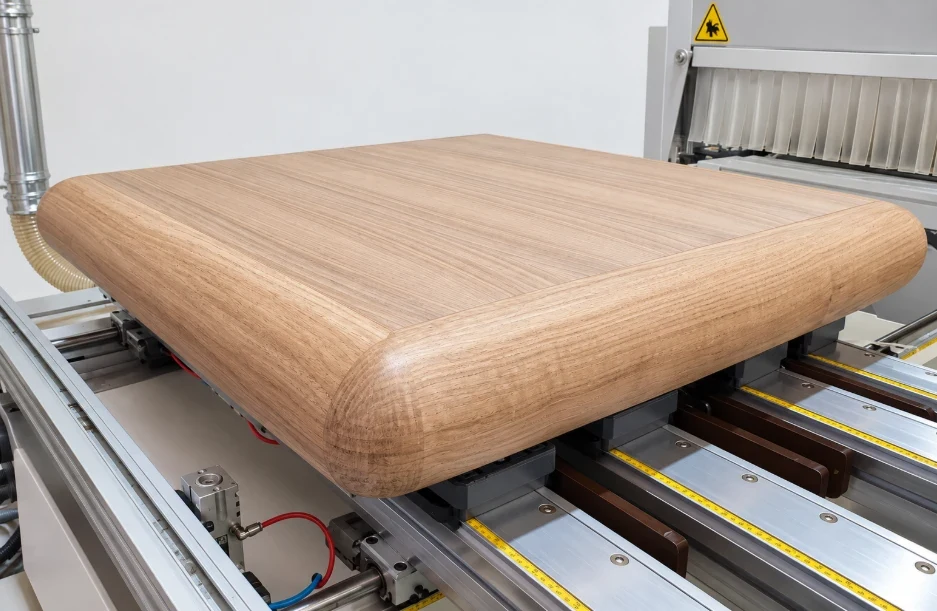
Oak top with rounded edges, freshly machined on our 5-axis CNC.
What it makes possible in furniture
- Curved ends and tops with the edge profiled in a single pass.
- Angled and bevelled edges that stay constant along the whole piece.
- Technical recesses for connection boxes, microphones or monitors, in the exact position.
- Solid 3D parts, such as sculpted legs or joints.
- Repeatability: the same program makes piece one and piece three hundred.
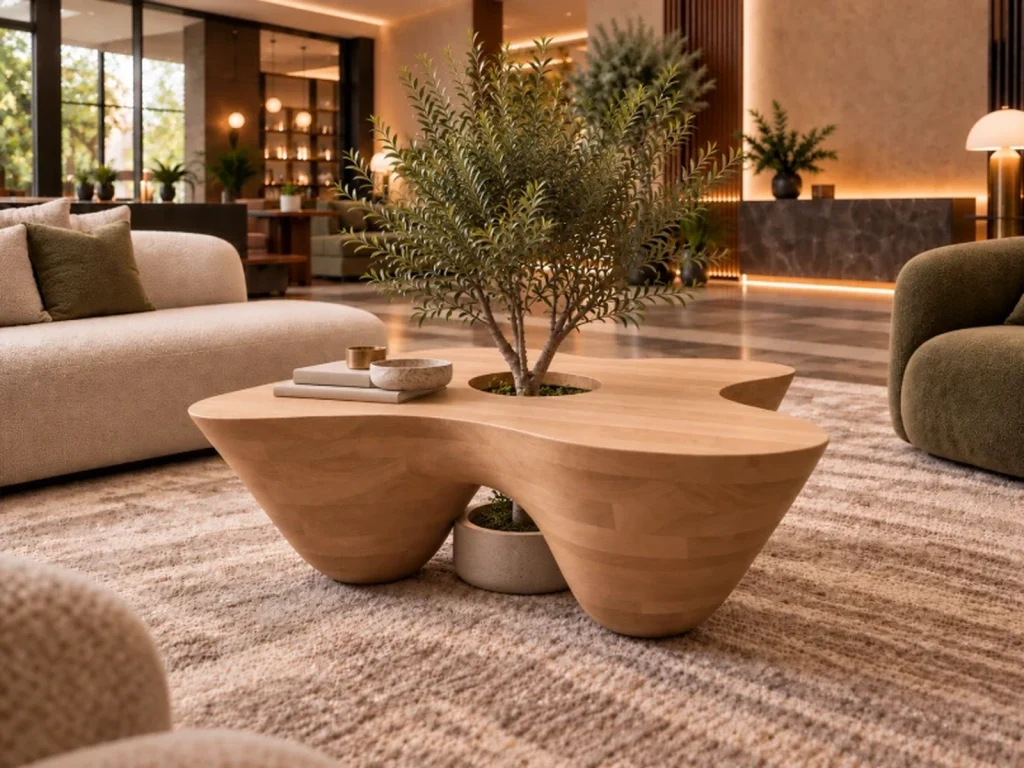
Coffee table in solid oak machined on a 5-axis CNC: the organic shape is cut from a glued-up block and finished by hand.
Why it matters to the designer
It means that a shape that looked difficult or expensive to make can be viable, and that in a series every unit fits the same way. In modular tables, for example, the joints between modules are flush because every piece comes out exactly the same.
See the machine in the workshop.
Frequently asked questions
Does the CNC replace the cabinetmaker?
No. The machine machines precisely, but fitting, finishing and details are still the work of skilled hands.
Does it make furniture more expensive?
On the contrary: for complex shapes it usually makes it cheaper, because it replaces jigs and hours of handwork.
By the technical office of Eban Premium, bespoke furniture manufacturer in Silla (Valencia, Spain).